Wednesday, April 21, 2010

Found - The Archigram Archival Project

The Archigram Archival Project makes the work of the seminal architectural group Archigram available free online for public viewing and academic study. The project was run by EXP, an architectural research group at the University of Westminster. It was funded by the Arts and Humanities Research Council and made possible by the members of Archigram and their heirs, who retain copyright of all images.

Link to the project below:

The Archigram Archival Project

Tuesday, April 20, 2010

The 100 - 15-19


click to enlarge

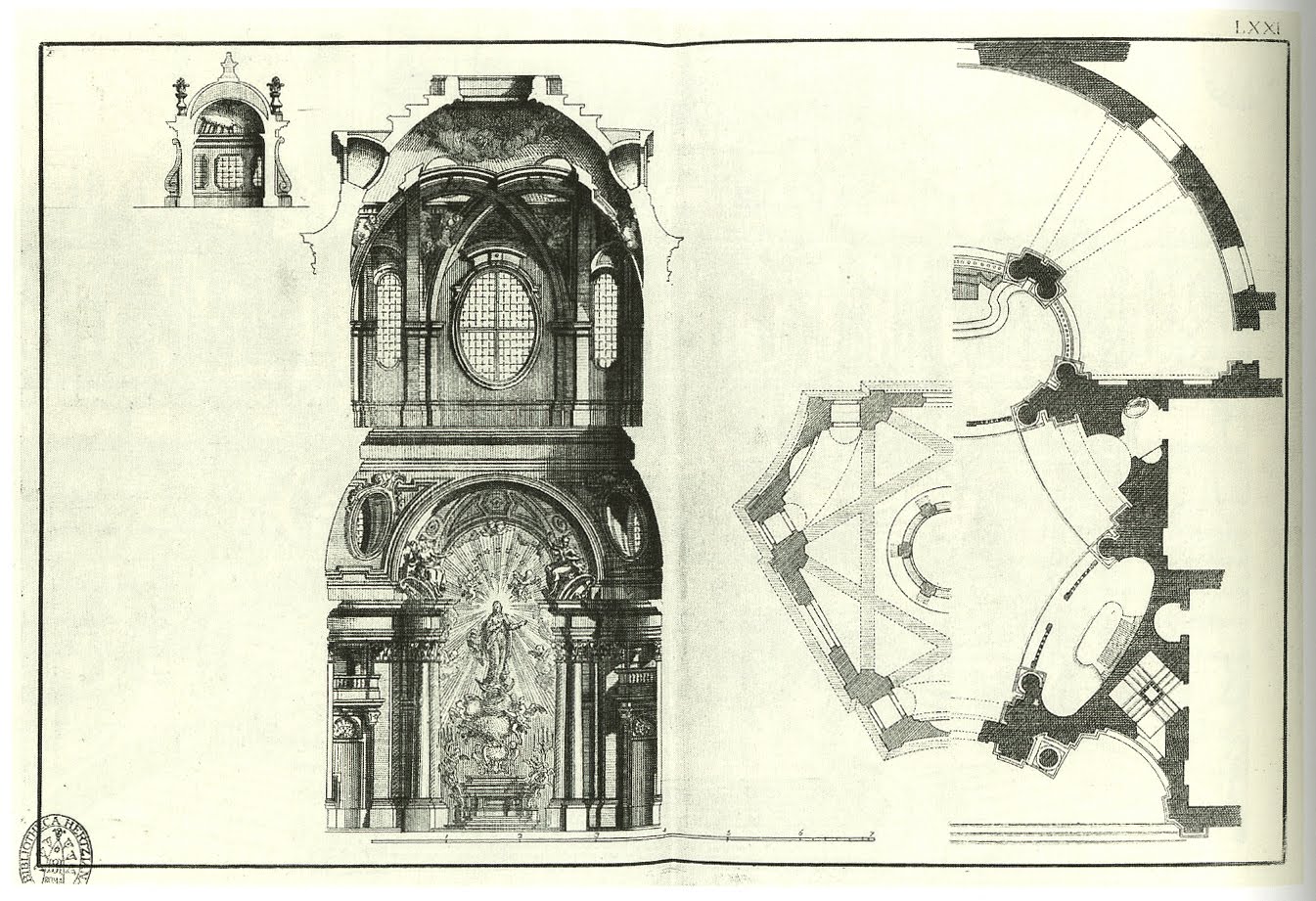
In order: Frank Lloyd Wright, Karl Friedrich Schinkel, Le Corbusier, Donato Bramante and VIllard de Honnencourt.

The 100 - 10-14


click to enlarge

In order: Julius Schorr von Carolsfeld, Mauro Gandolfi, John Flaxman, Frederick Sandys and Paulo Pagani


Sunday, April 18, 2010

Found - National Gallery to reveal its fakes in exhibition

The National Gallery is dusting off some of its most embarrassing acquisitions for a new exhibition looking at fake artworks.

Close Examination will display works of art that have been quietly removed from view after research showed they were not what they were thought to be.

They include works supposedly by Sandro Botticelli and Hans Holbein which were mistakenly thought to be genuine.

More than 40 works of art will go on display at the gallery in June.

The exhibition is billed as a celebration of "the remarkable collaboration of scientists, conservators and art historians" at the central London gallery.

Full story below


National Gallery to reveal its fakes in exhibition


Tuesday, April 6, 2010

The 100 - 5-9


click to enlarge

As a continuation of the "100" project here are
Michael Graves, Rob Krier, Giovanni Battista Piranesi, Erich Mendelsohn and Paul Klee.

Classification of Drawings

In readings and trying to explain drawings to others I have run into the situation where I need to differentiate the types or categories of drawings. It has been difficult but I think Michael Graves has done it quite well in his essay The Necessity for Drawing.

There are of course several types of architectural drawing. By clarifying the dominant nature of each type according to the intention of the architect assumes for his drawing, we find three primary categories: 1 the referential sketch, 2 the preparatory study, and 3 the definitive drawing. This sort of classification can never be pure, as all drawings have aspects of each category. However, it is important to identify the primary themes each.

1 The Referential Sketch. This kind of drawing may be thought of as the architect's diary or record of discovery. It is a shorthand reference that is generally fragmentary in nature, and yet has the power to develop into a more fully elaborated composition when remembered and combined with other themes. Like the physical artifact collected or admired as a model holding some symbolic importance the referential sketch is a metaphorical base that may be used, transformed, or otherwise engaged in a later composition.

I presume that most of us are by nature lazy, and when we see something that interests us in the natural or built landscape, we may deceive ourselves into thinking that we can remember it without drawing. However, if we do draw to remember, the chance that the particular image or set of images will stay with us is obviously increased. In making such a record of our observation, we of course do so with a point of view. It is that very bias by which the natural phenomenon is interpreted, reseen, that allows the artist to identify with the image and causes it to have special meaning for him. It goes without saying that what the artist or architect chooses to draw, using his sketchbook as a record of observation, reveals the examination of his artistic conscience.

2 The Preparatory Study. This type of drawing documents the process of inquiry, examining questions raised by a given intention in a manner that provides the basis for later, more definitive work. These drawings are by nature deliberately experimental. They produce variations on themes and are clearly exercises toward more concrete architectural ends. As the are generally developed in series, a process that is not wholly linear but that involves the reexamination of given questions. Generally didactic in nature, these studies instruct as much by what is left out as by what is drawn. The manner in which they are able to test ideas and provide the foundation for subsequent development involves a method of leaving questions open through the presumption of incompleteness and the technique of
pentimento - the erasure and subsequent reconstruction of thematic and figural representations.

3 The Definitive Drawing. This is the drawing that becomes final and quantifiable in terms of its proportion, dimension detail - indeed in its complete compositional configuration. In the two preceding categories of drawing, the burden of experience was placed on the life of the drawing as much as on the architectural conception. In the this final classification of drawing, however, the burden in inquiry in now shifted from the drawing to the architecture itself. The drawing becomes an instrument to answer questions rather than pose them. This is not to say that these drawings attempt to imitate reality; however, they can be regarded as the final step taken in the drawing process that allows the built reality. As in the preceding classifications these drawings must also remain somewhat fragmentary, since no single drawing can explain the several aspects of a building's intentions. The various means of representation of architectural ideas (plans, sections, three-dimensional drawings) show the building as an artifact imagined not so much through the existence of any one of these fragments, but by the understanding of the tension between them.

Wednesday, March 24, 2010

On Drawing - Rubens


Click images for enlargments

Transcribed from sketchbook while doing research at the Art Gallery of Ontario:
There are a few drawings here. The Prints and Drawings section in exclusively etchings at the moment. An interesting exhibition on Lucian Freud and Rembrandt, but they are not drawings. There is a similarity in the product but the process differs.
As I wander around the rest of the gallery I have come across a few Lithographs and a few drawings. Most of the drawings appear to be prep work for later paintings. Right now I am sitting in front of Rubens' Massacre of the Innocents. It is on the end wall of a near empty room. I say near the empty because over my right shoulder, hanging in the corner are six drawings. They are done in brown ink with a pen. They are smaller than an A4 sheet of paper. The drawings are anatomical studies done by Rubens in preparation for the Massacre of the Innocents.

They are beautiful.

Peter Paul Rubens


Six Anatomical Studies
around 1600-1610
black chalk, pen and brown ink,
brown wash on paper

The line work is amazing. Combined with the wash produces an amazing effect.
Only through attempting to draw or reproduce the image in front of me did I really understand what went into the original. The time taken and the effort put forth.

The exactness with which the lines are drawn to highlight a section of a muscle.


Posting Delay

I apologise to anyone who is reading my blog, but as you may have noticed I have changed the layout. I changed it in hopes of being able to post images in a more coherent way. As a result I am trying to figure out a better way of posting images. (Other than the vertical layout it used to be). So bear with me as there are a few posts coming out). So bear with me as I figure this out, there are a few coming out in the next little while.

Thanks for your patience.

The 100 - 1-4


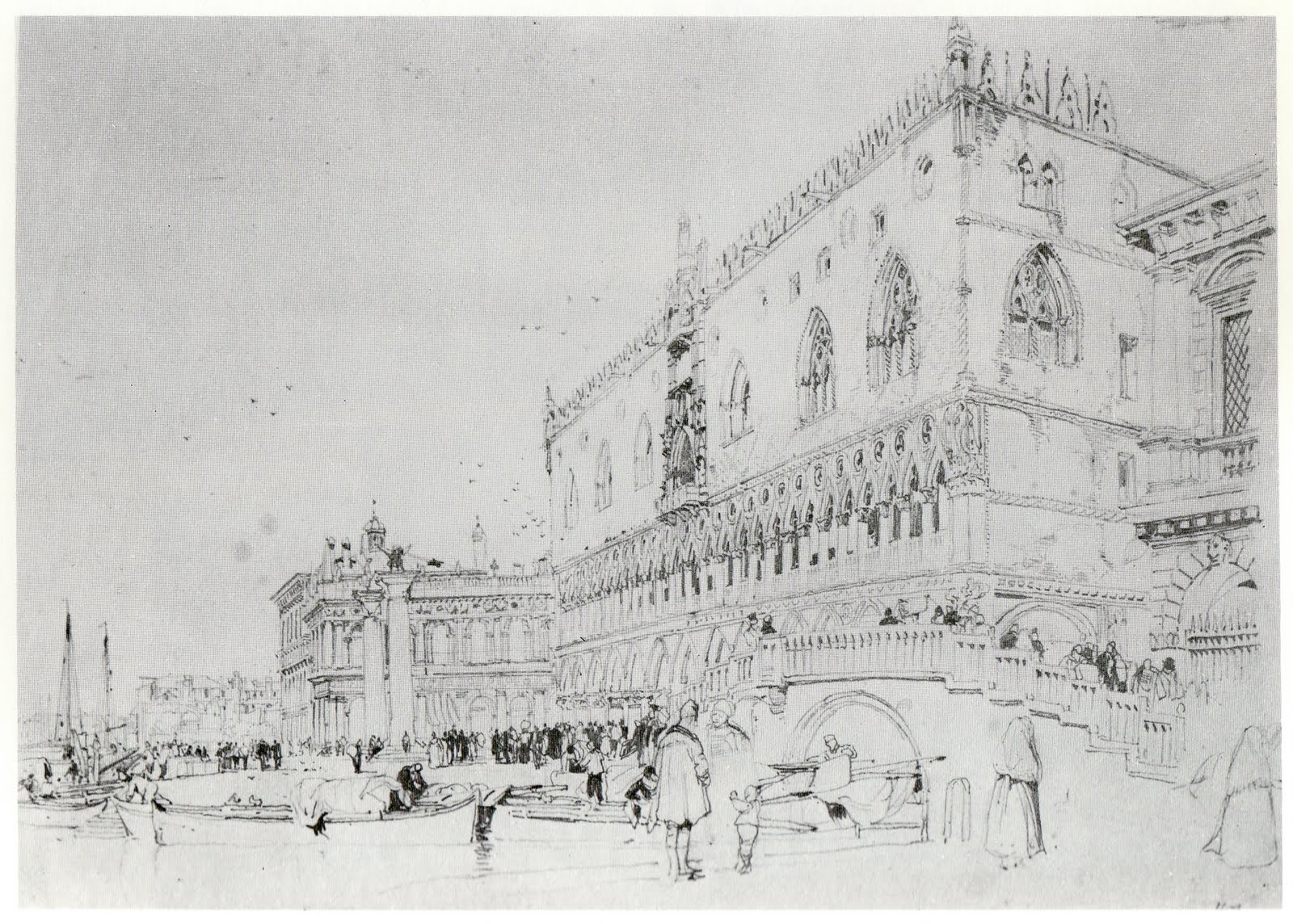
These are the beginnings of a new project I am doing simultaneously as drawing myself. I am collecting the 100 drawings that I feel are important, influential or just amazing and beautiful. In order they are David Hockney, Peter Paul Rubens, Herbert Railton and Richard Parkes Bonington.

Click the images to see larger versions.

Abstract - Attempt...again

Images were first made to conjure up the appearance of something that was absent. Gradually it became evident that an image could outlast what it represented; it then showed how something or somebody had once looked – and thus by implication how the subject had once been seen by other people.

John Berger


There is much that can be learned through the act of Drawing. It is a unique way to experience and investigate the world. It is not just seeing the world, it is about being in it. When you are confronted with an object, you are only seeing it. Seeing it in relation to yourself. If you try to draw that object you are interacting with it. You are experiencing it in relation to yourself as well as everything around it. In a line you gain a new understanding. When you try to find the curve or the connection between two points you are making a statement about what you see. It takes time to draw a line, it is a conscious effort, a deliberate intervention on the blank page and a record of how the object is seen by you. The drawing becomes a reference point for how you see yourself in the world. Though to begin to connect all those points together, we need to understand drawings.

When trying to understand drawings, there is a key aspect that needs to be addressed; Drawing as Language.

Through drawings we reveal the beauty and detail in everyday objects. They are a means of expression and through the aesthetics and lines of a drawing we begin to see a structure to that expression. We see the beginnings of the development of a language. That language is of great importance to Architecture. Architects trade in images, they are the language with which we communicate ideas and concepts. This communication can't happen verbally. It is a visual profession and therefore needs a visual language. It is important for people to be able to see and understand what is being “said” through these drawings and so an Architects needs to be able to “speak” the language. They need to spend time drawing and develop their own personal style; develop a Hand for Drawing. It is the same process as developing an Eye for Photography. After many hours of taking photographs you begin to instinctively know how to frame a certain scene or use the lighting to your advantage. It is the same for drawing. After many hours of drawing building, objects, people, etc, the drawer instinctively begins to understand how they relate to each other and can then more accurately conjure up the appearance of something that was absent. By developing a Hand they learn the letters, words and sentence structure that allows the language to be broadcast and understood.

This thesis documents the process of that investigation and follows the development of a Hand for Drawing.