Showing posts with label drawing. Show all posts

Wednesday, April 28, 2010

Drawing - Using Harmony


click images to enlarge

These are a few drawings I did while playing around with the Harmony program from the last post. It takes a little while to get used to how the program works. It isn't quite like drawing with pen and paper. Although I was using my mouse and trackpad. I imagine it would be quite different using a tablet or on the ipad/iphone. With those, you would have a bit more direct connection (or at least more familiar) with the drawing. As a result I found it quite difficult to subjects that were more rectilinear (as you can probably see in the house sketch). You almost have to let the drawing flow on it's own. So the organic shapes tended to work a bit better. It does bring up an interesting question of subject and medium. You really will get a completely different result by alternating the two. I think that is the next project.

Thursday, April 22, 2010

Found - The Campaign for Drawing


The Campaign for Drawing was launched in 2000 by the Guild of St George, a small charity founded by John Ruskin, whose writings on art, architecture, natural history, social and economic issues helped to shape Victorian cultural life. In 1871, he set up the Guild to assist the liberal education of artisans. The Guild initiated the Campaign to celebrate Ruskin's centenary and to promote his belief that drawing is a key to understanding and knowledge. Now an independent charity, the Campaign raises the profile of drawing as a tool for thought, creativity, social and cultural engagement. It has developed two programmes to encourage the use of drawing by professionals and others: The Big Draw and Power Drawing

The Campaign has created a new regard for the value of drawing to help people see, think, invent and take action. Its long-term ambition is to change the way drawing is perceived by educationalists and the public. This has won support from leading practitioners in the creative industries and in art, architecture and design colleges, signaling an overdue realisation that drawing is fundamental to the training of students in these disciplines. The Campaign takes a wider view. It sees drawing as a basic human skill useful in all walks of life. The Campaign's work will finish when the words 'I can't draw' are dropped from our vocabulary.

Link to their website below:

The Campaign for Drawing

Tuesday, April 6, 2010

The 100 - 5-9


click to enlarge

As a continuation of the "100" project here are
Michael Graves, Rob Krier, Giovanni Battista Piranesi, Erich Mendelsohn and Paul Klee.

Wednesday, March 24, 2010

The 100 - 1-4


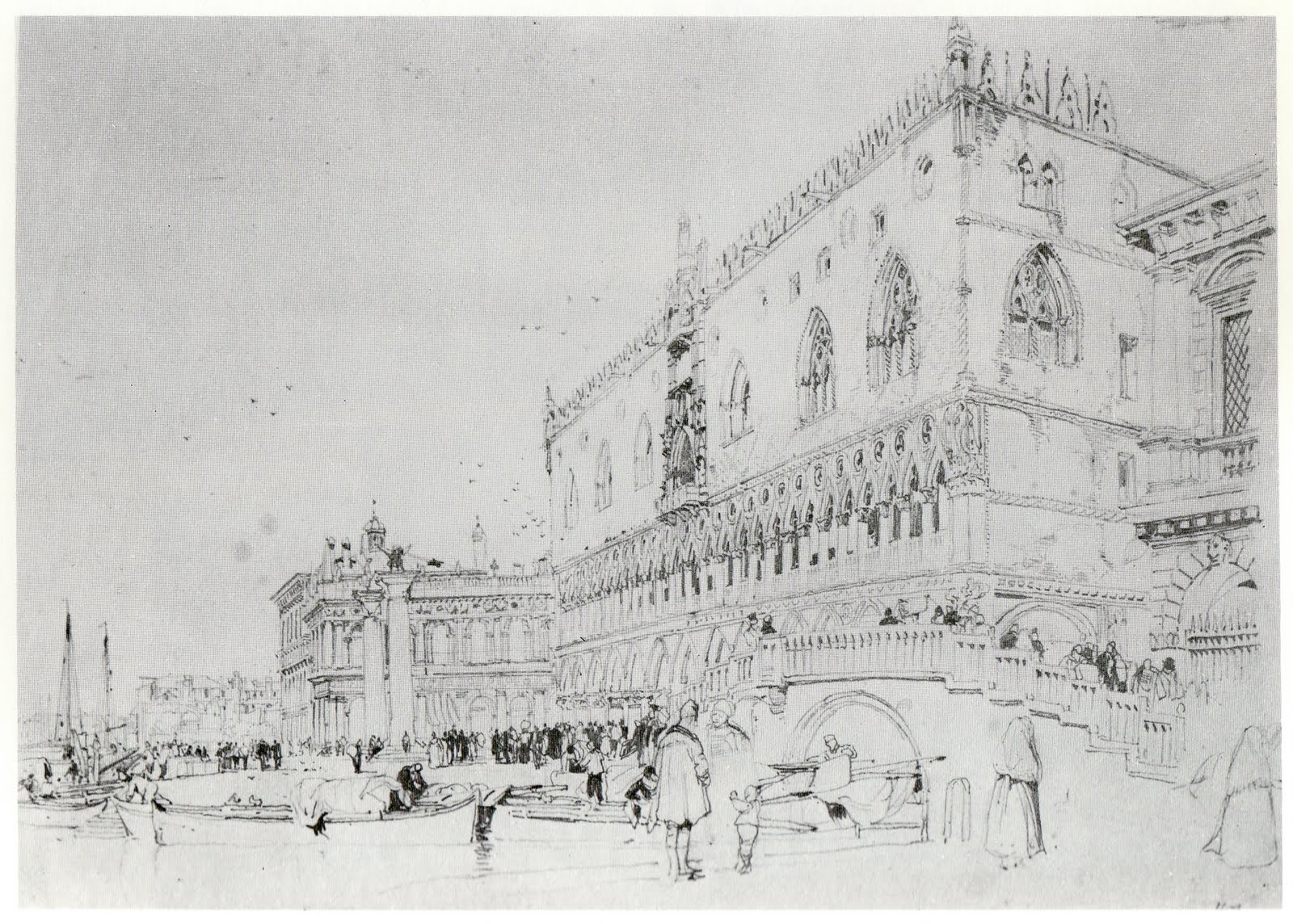
These are the beginnings of a new project I am doing simultaneously as drawing myself. I am collecting the 100 drawings that I feel are important, influential or just amazing and beautiful. In order they are David Hockney, Peter Paul Rubens, Herbert Railton and Richard Parkes Bonington.

Click the images to see larger versions.

Tuesday, September 29, 2009

The Act of Drawing

The act of drawing just as important as the end result. The evidence that the act occurred is, of course, the drawing itself. It is a remnant. Evidence that the act occurred.

But what is the “act”?

What occurs during the drawing process?

It is an exploration and a record at the same time.

Act: take steps, react, move, work, function, serve, have an impact on, action, feat, exploit, move, gesture, performance, undertaking, stunt, operation, achievement, accomplishment.

It is the movement of the body as the result of of the mind. The communication between what we see in our mind and the paper. The body, the hand, is the tool.

Maurice Merleau-Ponty agrees, "The painter “takes his body with him”, says ValĂ©ry. Indeed we cannot imagine how a mind could paint. It is by lending his body to the world that the artist changes the world into paintings. To understand these transubstantiations we must go back to the working, actual body – not the body as a chunk in space or bundle of functions but that body which is an intertwining of vision and movement."

How do you document the act?

Wednesday, April 8, 2009

The Bed - In Progress 1

This is a scan of the drawing I am currently working on. Looking back at 3x3x3, it was said that the bed was the most successful element of that drawing. This new drawing is building on that success. Staring with the same bed, let the drawing generate the design. No orthographics, just rendering. It is a reversal of the standard way that architects work. This drawing is the work in progress. I thought documenting how the design grows and develops would be a useful exercise.

There are so many things happening in the folds of the fabric. The way the lights hits the fabric creates the deep shadows and causes the gradients to spread outward across the bed. From this, other ideas have begun to develop about the design of the rest of the room. The chaos of the bed makes me want to have a more regular pattern to the floor. Something more linear; Wooden floor boards, crossing under the bed horizontally. They will also need to be darker than the sheets. The sheets are very faint while being surrounded by white, but with something darker butting up against it, they will be easily distinguishable.

Friday, March 27, 2009

25 Hour Drawing - 3x3x3

Exercise Synopsis: for a "Dwelling" measuring 3m x 3m x 3m, complete enough drawings to sufficiently describe the building. Two restrictions: only 1 sheet of paper, and I must draw for 25 hours total. If the drawings are "finished", I must keep drawing up to the 25 hr mark.


This is the result. An ink orthographic with pencil renders. The design was up to me and was completed quickly. That was not what the exercise was about. This is the first in a series. There will eventually be 3 total. All will be dwellings of some type, but they increase in scale: 8 x 8 x 8 and 24 x 24 x 24.

I think the increasing scale done on the same size sheet of paper is an interesting investigation into the effects that the drawing surface (or the constraints there of) will have on the drawing.

Because of the scale of this people, being 1:20, a fair amount of detail needed to be added so that the drawings didn't look empty. With it being a dwelling, I thought that some illustration of inhabitation should be added. I started with the bed; ruffled sheets, duvet tossed aside. These things added the feeling that someone was/could actually live in this space. This, to me, is the most successful part of the drawing. As I continued on, I made mistakes, fixed them, made new ones, etc. It was a very interesting process, being forced to continue drawing even if I thought it was done. I thought that I either needed another day of drawing, or 4 hours less.

With the bed being the most successful portion, a new sub-project has arisen. On a new sheet of paper, start with the same bed. Draw the way the light plays across the bedding, and begin to spread outward, letting the drawing (the light and shadow) determine the room. It was almost working backwards. Letting the drawings generate the design. It should be and interesting project.

Throughout the drawing process I am keeping a journal of the thoughts, revelations and questions that occur to me as I work my way through each drawing. I may be posting some of these pages with the drawings in the future.