Friday, June 4, 2010
Found - Photorealistic Pencil Drawings
Yup, that is a pencil drawing.
"I have loved to draw all my life but I especially like to draw graphite realism drawings," said Mr Lung from Hong Kong.
"Most of my drawings are A2 size and all are done using a 0.5mm technical pencil. I like graphite realism drawing because I can use just one single pencil to create millions of different textures."
Follow the link here to see the rest.
Monday, May 31, 2010
The 100 - 31-37

We are back to some Architects for this edition of The 100. In order they are: Sergei Tchoben, Riken Yamamoto, Michail Filippov, Lebbeus Woods, Ken Adam, Willem Van Der Hoed, and Wellington Reiter.
Friday, May 28, 2010
The 100 - 25-30


Moving forward in time a little bit from the last post we have, in order: Degas, Watteau, Rembrandt, Picasso, Albrecht Durer and Anthony Van Dyck.
Thursday, May 27, 2010
The 100 - Old Masters (20-24)

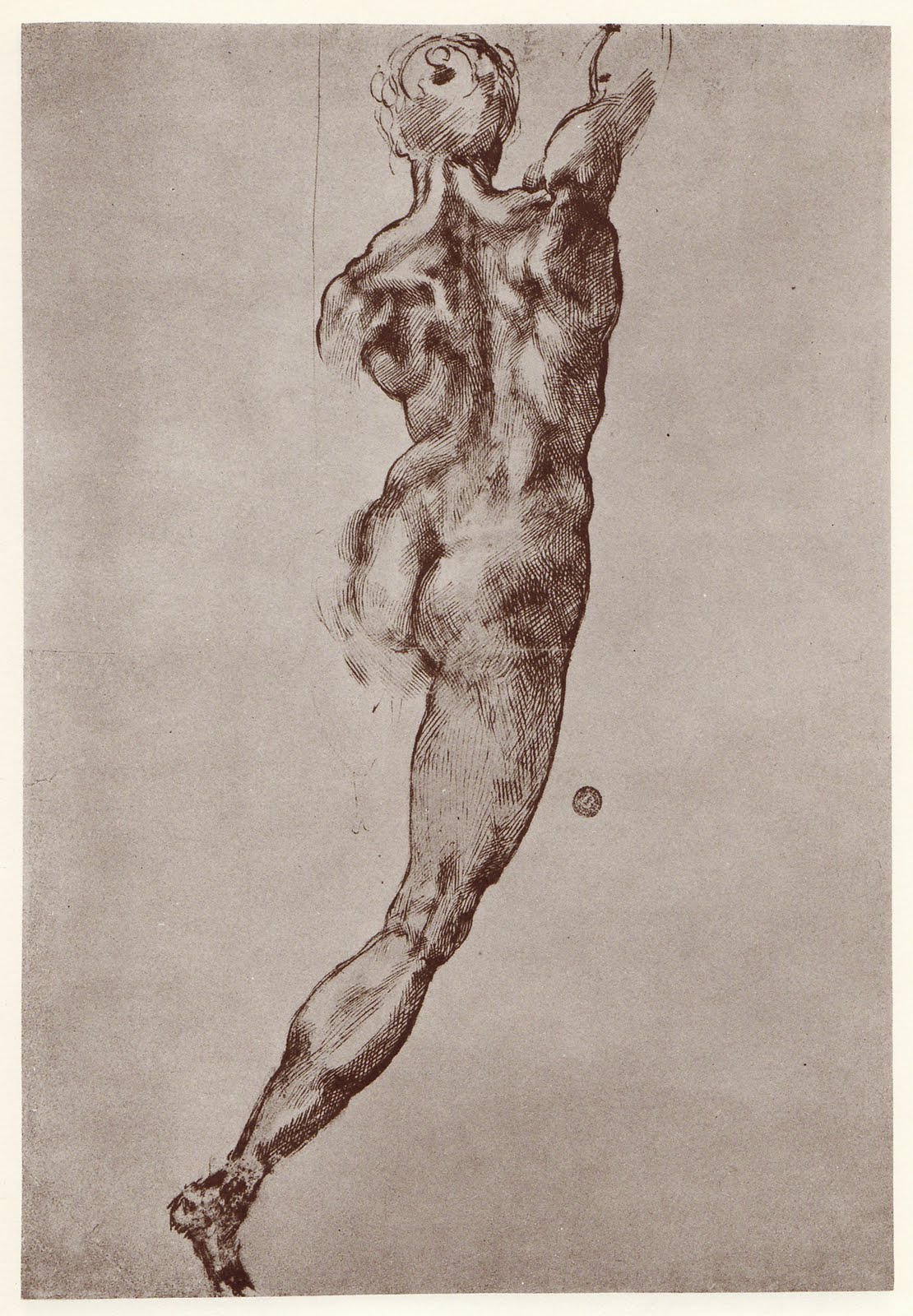
Well, continuing along with the 100 collected drawings, here are a few from some of the old masters. In order, they are: Raphael, Stephano Da Verona, Pisanello, Michelangelo, Leonardo DaVinci
Tuesday, May 18, 2010
The Grand Tour
The lessons of the Grand Tour were more personalized by Sir John Soane than probably any other eighteenth-century British architect. In 1776 Soane was awarded a travelling fellowship by the Royal Institute of British Architects. During his twenty-seven month voyage through Italy, he created a compiled hundreds of drawings and paintings that would later serve as the foundation for his Royal Academy lectures. The collection primarily contains archaeological records and includes measured drawings, sketches, and comparitive illustrations that detail issues of proportion and scale.
Another important figure of the eighteenth-century Grand Tour is the German architect Karl Friedrich Schinkel. Schinkel's archtecture responded to the classical forms of the mediterranean that he observed and sketched on his travels throughout Italy. To suppliment his accurate sketching, Schinkel developed a series of historical re-creations, inventive paintings possessing a strong narrative quality. He used the drawings and paintings from his travels to investigate the relationship between space and vision, a topic that would consume his career and define his architecture. The American architect Julia Morgan, the first woman admitted into the architectural program at the prestigious Ecole des Beaux-Arts in 1898, not only studied in Paris but took several trips around Europe, visiting sites and sketching her impressions.
Italy continued to play an inportant role in the education of the architect into the twentieth century. Even when photography replaced drawings as the primary method for producing images, architects still chose to draw in order to better impress the physical reality of a scene into their memories. The Swedish architect Erik Gunnar Asplund returned home from his journey through Italy with hundreds of postcards of architecture, paintings, and sculpture to supplement more than three hundred pages of drawings, sketches, annotations and portraits. Le Corbusier carried a camera with him on his earliest voyages to Rome in 1911, yet relied most heavily on the sketch to record the image. He stated, "When one travels and works with visual things...one uses one's eyes and draws, so as to fix deep down in one's experience what is seen...All this means first look, and then observe, and finally to discover. Once the impression has been recorded by the pencil, it stays for good, entered, registered, inscribed." The architect Louis Kahn claims to have found himself architecturally during his sketching trips through Italy. Kahn captured what he called the "little village" of Italian medieval and vernacular architecture in a series of graphite drawings and watercolours.
excerpt from Michael Graves: Images of a Grand Tour by Brian M. Ambroziak
Wednesday, April 28, 2010
Drawing - Using Harmony


These are a few drawings I did while playing around with the Harmony program from the last post. It takes a little while to get used to how the program works. It isn't quite like drawing with pen and paper. Although I was using my mouse and trackpad. I imagine it would be quite different using a tablet or on the ipad/iphone. With those, you would have a bit more direct connection (or at least more familiar) with the drawing. As a result I found it quite difficult to subjects that were more rectilinear (as you can probably see in the house sketch). You almost have to let the drawing flow on it's own. So the organic shapes tended to work a bit better. It does bring up an interesting question of subject and medium. You really will get a completely different result by alternating the two. I think that is the next project.
Tuesday, April 27, 2010
Found - Online Sketching
Try it out, click the link below:
Online Sketching
Thursday, April 22, 2010
Found - The Campaign for Drawing

The Campaign for Drawing was launched in 2000 by the Guild of St George, a small charity founded by John Ruskin, whose writings on art, architecture, natural history, social and economic issues helped to shape Victorian cultural life. In 1871, he set up the Guild to assist the liberal education of artisans. The Guild initiated the Campaign to celebrate Ruskin's centenary and to promote his belief that drawing is a key to understanding and knowledge. Now an independent charity, the Campaign raises the profile of drawing as a tool for thought, creativity, social and cultural engagement. It has developed two programmes to encourage the use of drawing by professionals and others: The Big Draw and Power Drawing
The Campaign has created a new regard for the value of drawing to help people see, think, invent and take action. Its long-term ambition is to change the way drawing is perceived by educationalists and the public. This has won support from leading practitioners in the creative industries and in art, architecture and design colleges, signaling an overdue realisation that drawing is fundamental to the training of students in these disciplines. The Campaign takes a wider view. It sees drawing as a basic human skill useful in all walks of life. The Campaign's work will finish when the words 'I can't draw' are dropped from our vocabulary.
Link to their website below:The Campaign for Drawing
Wednesday, April 21, 2010
Found - The Archigram Archival Project
Link to the project below:
The Archigram Archival Project
Tuesday, April 20, 2010
The 100 - 15-19